
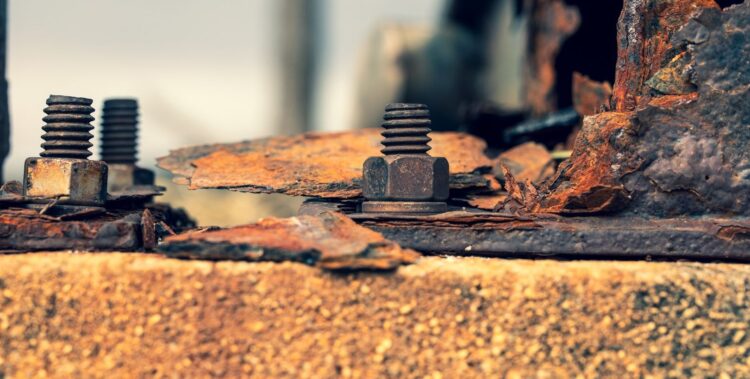
How to Prevent Galvanic Corrosion Between Dissimilar Metals in Outdoor Enclosures
On September 13, 2026 by lukasManaging Dissimilar Metal Interactions in Harsh Outdoor Environments
Outdoor enclosures rarely provide the luxury of using one metal throughout the complete assembly. An aluminum cabinet may need stainless steel fasteners, plated brackets, copper grounding hardware, or galvanized support steel. Each material may be appropriate for its individual function, yet the joint can become a corrosion system when moisture, electrical continuity, and dissimilar electrochemical behavior are present at the same time. A specification-first design therefore evaluates the complete interface, not simply the corrosion resistance of each individual component.
Galvanic corrosion can reduce wall thickness around fasteners, loosen structural joints, compromise grounding paths, and damage gaskets or coated seams. Once corrosion products distort a flange or create a pinhole beside a screw, the enclosure may no longer maintain its intended IP protection against dust and water. The engineering answer is not to rely solely on a textbook galvanic series chart. Actual performance depends on salt concentration, wetting duration, temperature, coating damage, joint geometry, drainage, fastener area, and installation quality. Durable outdoor design combines compatible metallurgy, controlled area ratios, physical electrical isolation, and a surface treatment strategy that remains effective after years of field exposure.
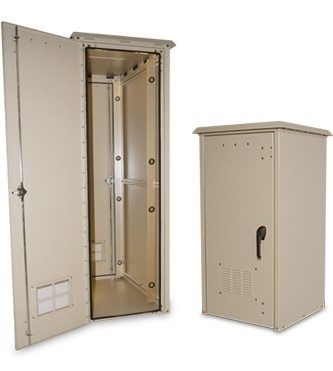
The Mechanics of Galvanic Cells in Field Deployments
A galvanic cell requires three conditions. First, two metals with different electrochemical potentials must be present. Second, those metals must have an electrically conductive path between them, often through direct contact, a fastener, a mounting bracket, or a grounding connection. Third, an electrolyte must bridge the surfaces. The electrolyte does not need to be standing water. A thin film of condensation, salt-laden humidity, rainwater trapped beneath a washer, or contaminated dust can be sufficient.
When the circuit is active, the less noble metal becomes the anode and releases electrons, while the more noble metal acts as the cathode and is comparatively protected. Aluminum joined to stainless steel is a common example. Aluminum generally becomes the anodic member, while stainless steel supports the cathodic reaction. The risk increases when salt fog, acidic pollutants, industrial chemicals, or repeated condensation raise the conductivity of the electrolyte. Temperature and humidity also influence how long the joint remains wet. A cabinet that appears dry during a daytime inspection may still experience hours of electrochemical activity overnight.
The area ratio is one of the most consequential design variables. A small anodic fastener connected to a much larger cathodic panel can corrode rapidly because the anodic current is concentrated on a limited surface. Conversely, a large anodic aluminum panel connected to a relatively small stainless fastener may distribute the corrosion demand more broadly, although that arrangement is not automatically safe in a marine atmosphere. Practical design reviews should identify every exposed junction, including threads, washer edges, scratches, hinge interfaces, grounding points, and coating defects.
- Dissimilar metals create the electrochemical potential difference.
- Metallic continuity completes the electron path.
- Moisture, saltwater, condensation, and contaminants provide the electrolyte.
- A small anode paired with a large cathode creates a high local corrosion risk.
- Crevices and coating defects can retain electrolyte long after visible water has disappeared.
Hardware Pairing Strategies for Structural Compatibility
Aluminum enclosures with 304 stainless steel fasteners are widely used because the combination offers a practical balance of low enclosure mass, good mechanical strength, and general outdoor corrosion resistance. In more aggressive environments, 316 stainless steel is often selected for its improved resistance to chloride exposure. However, the higher corrosion resistance of the fastener can increase the electrochemical driving force against aluminum when the joint is wet. Compatibility must therefore be assessed as a complete system, including fastener coating, washer material, joint seal, surface finish, and exposed area.
Galvanic series data is useful for screening material combinations, but the values are environment-dependent. A pairing that performs acceptably in a dry inland installation may deteriorate quickly near a coastline, road treated with deicing salts, wastewater facility, or industrial exhaust source. A potential difference commonly cited as relatively low risk when metals are close in the series should not be treated as a universal acceptance limit. Geometry, electrolyte conductivity, and wetting time can dominate the result. Stainless steel can also suffer localized corrosion if chlorides, deposits, or oxygen-starved crevices are present.
| Application condition | Typical pairing consideration | Primary design response |
|---|---|---|
| Dry or sheltered inland site | Aluminum enclosure with 304 stainless hardware may be practical | Use washers, joint sealant, and controlled drainage |
| Humid industrial site | Pollutants and condensation increase electrolyte conductivity | Specify isolation, coating repair procedures, and inspection access |
| Coastal or salt-fog exposure | Aluminum to stainless steel requires more conservative protection | Prefer 316 hardware where appropriate, isolate the joint, and protect exposed aluminum |
| High structural loading | Polymer isolation may affect preload or bearing strength | Use engineered sleeves and washers with verified compression limits |
Mechanical requirements still govern hardware selection. A polymer or aluminum fastener may reduce galvanic interaction but fail to provide the required tensile strength, torque capability, thread durability, or vibration resistance. The correct decision is usually not simply “choose the most corrosion-resistant metal.” It is to select hardware that meets the structural specification, then interrupt the electrochemical path and protect the exposed surfaces. Supplier qualification, coating certificates, torque data, and environmental test results should be part of the procurement package. Custom enclosure manufacturers such as KDST outdoor cabinet solutions illustrate why enclosure material, coating, hardware, cooling, and system integration need to be considered together rather than sourced as unrelated parts.
Isolation Barriers and Physical Dielectric Separation
The most direct way to prevent galvanic action is to eliminate electrical continuity between the dissimilar metals while preserving the mechanical function of the joint. Non-conductive washers isolate fastener heads from enclosure surfaces, shoulder sleeves prevent screws from touching the sides of clearance holes, and insulating gaskets separate flanges. A complete isolation system must address every possible metallic bypass. Installing only a nylon washer under the screw head is ineffective if the screw shank contacts the hole wall or a metal backing washer bridges the joint.
Common isolation materials include nylon, PTFE, neoprene, polyamide, polyester, and other engineered polymers. Nylon is economical and mechanically useful, but moisture absorption, temperature limits, ultraviolet exposure, and long-term creep must be assessed. PTFE has excellent chemical resistance and low friction, although its softness and creep behavior can reduce retained preload in some joint designs. Neoprene and related elastomers can provide sealing and electrical separation, but compression set, ozone exposure, and compatibility with oils or cleaning agents require review. In high-temperature or high-load applications, glass-reinforced polymers or purpose-designed insulation kits may offer more stable dimensional performance.
- Specify a gasket that seals the joint without creating a hidden water pocket.
- Use sleeves that span the full thickness of the metallic clearance hole.
- Provide insulating washers on both sides where a bolt passes through a conductive bracket.
- Check dielectric strength, operating temperature, UV resistance, chemical compatibility, and water absorption.
- Define torque limits based on the isolator”s compression and creep characteristics.
Isolation must survive installation and service. Excessive torque can crush a polymer washer, split an elastomeric gasket, or deform a shoulder sleeve. Insufficient torque can permit vibration loosening, fretting, and loss of gasket compression. Thermal cycling adds another challenge because aluminum, stainless steel, and polymer components expand at different rates. A design that maintains an IP65 or IP66 seal during initial assembly may lose compression after repeated heating and cooling if the isolator exhibits excessive cold flow. Joint testing should include torque retention, thermal cycling, water spray, salt exposure where applicable, and electrical resistance verification. Insulation practices used in industrial flange joints often combine gaskets, sleeves, washers, and backing washers, with electrical continuity checks used to confirm that the barrier has not been bridged.
Sacrificial Coatings and Surface Treatments Under Field Conditions
Coatings provide a second line of defense when complete isolation is impractical or when scratches and assembly damage are credible field conditions. Hot-dip galvanizing places a zinc coating over steel, allowing zinc to act sacrificially where the coating is exposed or damaged. Zinc-nickel plating can provide a more controlled metallic coating with improved corrosion performance compared with conventional zinc in suitable applications. Chromate conversion coatings, particularly on aluminum, improve surface protection and can support coating adhesion, although their use must comply with applicable environmental, health, and customer requirements.
Sacrificial protection works because the coating is more anodic than the protected base metal. That mechanism has limits. The zinc layer is consumed over time, and consumption accelerates in salt spray, standing water, crevices, and areas where large cathodic stainless surfaces are connected to small exposed zinc regions. A coating should therefore be treated as a managed design layer, not an unlimited guarantee. NASA”s corrosion-control standard, NASA-STD-6012A, demonstrates the specification-first principle by requiring documented qualification and control of corrosion-prevention materials and processes for applicable flight hardware. Outdoor infrastructure should use the same discipline at an appropriate level of rigor.
| Protection method | Strength | Important limitation |
|---|---|---|
| Hot-dip galvanizing | Robust zinc coverage for many steel structures | Edges, threads, drainage, and zinc consumption require control |
| Zinc-nickel plating | Useful for precision fasteners and controlled coating thickness | Performance depends on process quality, damage, and environment |
| Chromate conversion | Supports aluminum surface protection and paint adhesion | Thin film can be damaged by abrasion and may face regulatory restrictions |
| Powder coating | Strong organic barrier with good appearance and broad color options | A scratch or pinhole can expose the base metal and concentrate corrosion |
Powder coating and paint are barrier systems, not normally sacrificial systems. They perform well when coverage is continuous and edges, seams, and fastener interfaces are properly prepared. During a micro-scratch event, however, a damaged organic coating may expose a small anodic area next to a large cathodic surface. Metallic sacrificial coatings can continue to offer localized protection after minor damage, but they too require adequate coating thickness and inspection. The most reliable strategy combines surface preparation, compatible primers or conversion treatments, sealed interfaces, corrosion-inhibiting compounds under fastener heads, and a defined repair process for scratches created during installation.
Engineering Checklist for Long-Life Enclosure Assemblies
Corrosion prevention should be embedded in CAD, drawings, and installation instructions before hardware is released for production. The review must include hidden interfaces, not only the visible exterior. Pay particular attention to doors, hinges, removable gland plates, mounting feet, grounding studs, roof seams, cable entries, and brackets that may collect runoff. Enclosure IP performance depends on more than gasket selection. As described in guidance on outdoor cabinet IP protection, environmental exposure, water direction, dust, ventilation, and thermal requirements must be evaluated together.
- Audit every joint interface and electrolyte ingress path during CAD layout. Identify dissimilar materials, exposed fasteners, crevices, coating breaks, condensation zones, and water paths from roofs or cable entries.
- Balance the cathode-to-anode surface area ratio across critical junctions. Avoid small exposed anodic parts connected to large noble-metal surfaces, and enlarge or protect the anodic area where the joint cannot be isolated.
- Implement dielectric isolation with specified torque allowances. Document washer, sleeve, gasket, and backing-washer materials, then validate compression, creep, vibration resistance, and electrical resistance after assembly.
- Verify drainage design to avoid electrolyte pooling inside seams. Use sloped surfaces, open drainage paths where appropriate, sealed crevices, controlled breather arrangements, and gasket geometries that do not trap contaminated water.
Verification should reproduce the intended field condition rather than rely on a single visual inspection. Depending on the application, testing may include cyclic humidity, salt spray, immersion, thermal cycling, vibration, water-jet exposure, and accelerated coating damage. After testing, inspect for white corrosion products on aluminum, red rust on steel, staining around fasteners, gasket extrusion, loss of torque, and any reduction in insulation resistance. Maintenance documentation should state how coatings are repaired, how fasteners are re-torqued, and how often seams and drainage features are inspected.
Building Resilient Enclosure Joints That Stand the Test of Time
A long-life outdoor enclosure joint is built through layered defense. Material selection reduces the potential difference, area-ratio control limits local current density, dielectric barriers interrupt the circuit, and sacrificial or organic coatings protect surfaces that remain exposed. No single measure is reliable in every deployment. A nylon washer can be defeated by a conductive bypass, a powder coating can fail at a scratch, and a carefully selected stainless fastener can still accelerate aluminum attack in saltwater if the joint geometry concentrates corrosion at a small defect.
- Design the joint for the actual electrolyte, not an idealized dry environment.
- Specify the complete isolation stack, including sleeves and backing washers.
- Use coatings as part of a system and define how field damage will be repaired.
- Control torque, drainage, sealing, and inspection access as reliability requirements.
- Validate the finished assembly from datasheet to deployment through environmental and mechanical testing.
The lifecycle cost advantage is substantial. A robust joint design may add a small amount of material cost, assembly control, and qualification effort at the beginning, but it can prevent cabinet replacement, emergency site visits, failed electronics, unsafe grounding conditions, and recurring gasket repairs. The decision-ready approach is to treat galvanic compatibility as a system requirement linked directly to structural reliability and ingress compliance. When metallurgy, isolation, coatings, drainage, and maintenance are specified together, outdoor enclosures are better positioned to retain their mechanical function, electrical safety, and IP performance throughout the intended service life.