
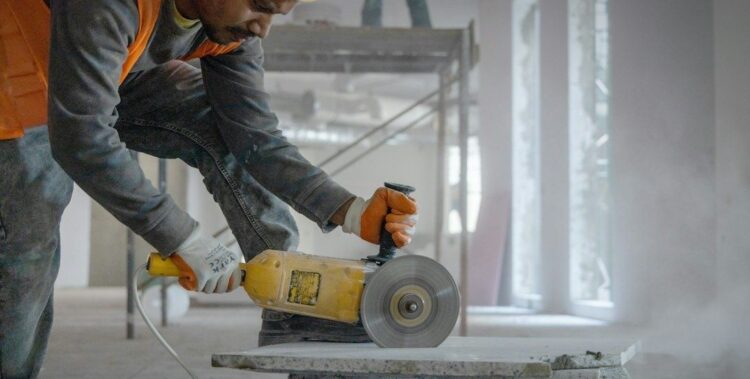
Wet Suppression vs Cyclonic HEPA Extraction: Silica Control on Concrete Jobsites
On October 12, 2026 by lukasEngineering Beyond Compliance in Jobsite Silica Mitigation
Respirable crystalline silica control on concrete jobsites is an engineering problem before it is a purchasing decision. Concrete cutting, grinding, drilling, and demolition can generate respirable particles small enough to remain suspended in the work area and penetrate deep into the lungs. The regulatory reference point is a permissible exposure limit of 50 micrograms per cubic meter as an eight-hour time-weighted average, with an action level of 25 micrograms per cubic meter. California requirements are set out in the Respirable Crystalline Silica Standards and Resources, alongside obligations covering exposure assessment, engineering controls, housekeeping, training, medical surveillance, and records.
Wet suppression and dry cyclonic HEPA extraction can both form part of a compliant exposure-control strategy, but they are not interchangeable checkboxes. Their field performance depends on capture physics, tool geometry, material throughput, temperature, available utilities, and the contractor”s ability to contain waste after capture. A specification-first comparison therefore needs to examine airflow and CFM ratios, slurry containment, filter loading, thermal limits, operator ergonomics, and the full lifecycle footprint. The correct system is the one that remains effective when the work becomes repetitive, mobile, dirty, cold, or constrained by finished surfaces.
Aerodynamic Performance and CFM Ratios in Dry Extraction
Dry extraction succeeds only when the collection system moves enough air at the point where dust is generated. A commonly used sizing rule is approximately 25 cubic feet per minute, or CFM, for each inch of blade diameter. This is a starting point rather than a substitute for a complete system calculation. The final specification must account for the tool shroud, hose diameter, hose length, bends, elevation, leakage, and the pressure drop created by filters. A saw or grinder may have a high nominal airflow rating, yet provide poor capture if the shroud is poorly fitted or the system loses static pressure through undersized ducting.
Capture velocity is equally important. Cutting and grinding systems are often designed around a capture range of roughly 100 to 200 feet per minute at the source, although the required value varies with the operation and enclosure geometry. A tight shroud can make a moderate extractor highly effective, while an open or damaged shroud can allow dust to escape even when the vacuum motor is operating at full capacity. This is why compatibility from datasheet to deployment matters more than motor horsepower alone.
A cyclonic pre-separator improves that compatibility by removing heavy aggregate and coarse debris before the material reaches the primary HEPA media. Properly configured units can drop out approximately 90 percent of heavy material, reducing filter loading and preserving airflow. The remaining fine fraction is directed through certified HEPA filtration, commonly specified as H13 or H14 for demanding silica-control applications. Automatic pulse-jet reverse-air cleaning periodically dislodges accumulated dust from the filter surface, helping stabilize face velocity and reducing the frequency of manual filter handling.
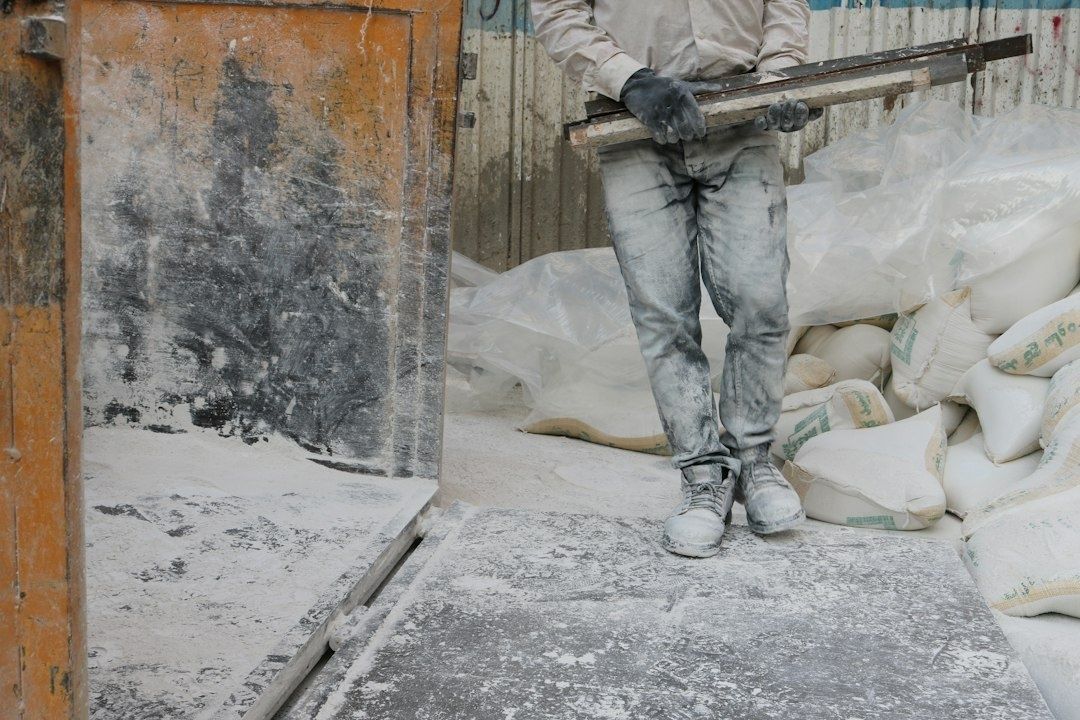
- Specify airflow and static pressure together, not CFM in isolation.
- Match hose diameter and length to the extractor”s operating curve.
- Use a close-fitting shroud with a seal that tolerates vibration and tool movement.
- Provide a cyclonic pre-separator when aggregate volume or continuous cutting would rapidly load the filter.
- Verify pulse-jet function, filter condition, and alarm operation during routine inspections.
Fluid Dynamics and Containment Overhead in Wet Suppression
Wet suppression controls dust at the source by introducing water into the cutting or grinding interface. The water curtain saturates the material and captures particles within the boundary layer around the blade or abrasive. This approach can be highly effective for high-volume cutting because it prevents a substantial portion of the dust from becoming airborne in the first place. However, the result depends on continuous delivery, correct nozzle placement, adequate flow, and sufficient wetting at the actual contact zone. A trickle that reaches the floor but not the tool interface is not a reliable engineering control.
Water changes the waste stream rather than eliminating it. Captured silica becomes part of an alkaline slurry containing cement fines, aggregate, and potentially other jobsite contaminants. That slurry must be directed, collected, transported, and disposed of without allowing it to dry. Dried residue can become airborne again during foot traffic, sweeping, or later surface preparation. Downstream pH requirements, discharge restrictions, settling capacity, and containment integrity therefore become part of the dust-control specification.
Safe work guidance from Safe Work Practices supports a layered approach that can combine water, local exhaust ventilation, enclosures, HEPA filtration, housekeeping controls, and respiratory protection where necessary. On a practical level, a wet system may require a clean water source, pump capacity for continuous delivery, hoses, recovery equipment, settling containers, and a wet vacuum rated for slurry. The control is only complete when the waste pathway is designed as carefully as the water pathway.
- Confirm the tool”s required water flow and pressure under actual operating load.
- Position and protect nozzles so that water reaches the cutting interface without obstructing the operator.
- Provide berms, drain covers, or collection trays before work begins.
- Recover slurry promptly with suitable wet-vacuum equipment.
- Keep residue wet until it is contained, and document disposal or treatment requirements.
Direct Operational Comparison Across Core Field Applications
The best choice changes with the tool, the surface, and the surrounding environment. Flat sawing often favors wet suppression when large volumes of concrete are removed and floor drainage or containment can be engineered. High-speed wall grinding frequently favors dry extraction because continuous water can damage adjacent finishes, create slip hazards, and complicate vertical containment. Deep core drilling can support either method, but the decision turns on drilling duration, water recovery, access to the work face, and the need to preserve a clean bore location.
| Application | Wet suppression | Cyclonic HEPA extraction | Primary field constraint |
|---|---|---|---|
| Flat sawing | Strong source capture and cooling for sustained cutting | Useful where water is restricted or containment is difficult | Slurry volume, drainage, and surface protection |
| High-speed wall grinding | Can create runoff on vertical surfaces and finished interiors | Effective with a close shroud and correctly sized hose | Shroud fit, hose drag, and filter loading |
| Deep core drilling | Controls dust and bit heat but requires recovery capacity | Suitable for dry drilling where the tool and shroud support capture | Long-duration flow, bore debris, and access |
Indoor air quality is a major differentiator. Dry extraction avoids free water, reduces slip exposure, and is generally better suited to finished enclosed environments when the extractor, shroud, and filtration are properly matched. Wet suppression can still be appropriate indoors, but it requires a deliberate floor-protection and recovery plan. Freezing conditions further shift the balance. Water in hoses, pumps, valves, and low points can freeze, interrupting control and damaging equipment. Dry extraction avoids that freeze line risk, although it introduces filter, hose, and electrical maintenance requirements.
Operator fatigue also affects control reliability. A heavy hose that drags across a floor can encourage an operator to loosen or remove the shroud. Conversely, a water hose, supply line, and recovery hose can create a separate tethering burden. The practical specification should evaluate reach, coupling location, hose support, tool balance, and whether a second worker is needed for waste management. A control that is technically effective but routinely bypassed is not fit for the application.
Lifecycle Cost and Field Ergonomics Over Multi-Year Fleets
Capital cost comparisons should include the complete operating package. An industrial three-phase cyclonic extractor may require a substantial initial investment in the power unit, pre-separator, HEPA filtration, hoses, shrouds, and universal tool couplings. Its value increases when the fleet performs recurring dry grinding, enclosed renovation, or work in locations where water discharge is unacceptable. Onboard pressurized water equipment may appear simpler for a saw or drill, but the installed cost can expand once pumps, tanks, hose reels, containment, recovery vacuums, settling capacity, and transport are included.
Recurring costs follow different patterns. Dry systems consume filters, seals, hoses, and wear components. Certified HEPA cartridges require correct replacement procedures and controlled handling so that loaded media does not release dust. Cyclonic pre-separation and pulse-jet cleaning can extend filter service intervals, but neither eliminates inspection or replacement. Wet systems consume water and create labor-intensive slurry handling. Geotextile filtration, settling media, containers, wet-vacuum wear parts, and disposal charges can become significant across a multi-year fleet, especially where each crew must manage small quantities at multiple locations.
Reliability should be measured under the harshest expected conditions rather than at the warehouse. Sub-freezing jobsites expose wet systems to frozen lines, cracked pump housings, blocked valves, and delayed startup. Hot, dusty environments can increase motor and filter stress in dry systems. Vibration, aggregate impact, hose abrasion, and repeated coupling cycles affect both technologies. A fleet specification should therefore distinguish between purchase price and lifecycle risk.
- Budget for extraction accessories, not only the vacuum motor or water unit.
- Track filter hours, pulse-jet events, hose failures, and wet-waste disposal volume.
- Specify quick-connect couplings that prevent improvised hose reductions or open discharge.
- Provide winterization procedures and protected storage for wet equipment.
- Include operator time for setup, cleanup, filter changes, slurry recovery, and transport.
Building an Adaptive Dust Mitigation Specification for Your Fleet
A decision-ready fleet specification should assign each method to the applications where its control mechanism remains reliable. Wet suppression is often the stronger choice for high-volume structural demolition, sustained flat sawing, and operations where water can be captured without damaging adjacent assets. Cyclonic HEPA extraction is generally better suited to finished enclosed environments, vertical grinding, cold-weather work, and projects where dry waste containment is simpler than liquid recovery. Neither choice removes the need for exposure assessment, training, housekeeping, respiratory protection when required, and field verification.
Standardization reduces operator bypass and procurement complexity. Quick-connect shrouds, universal tool couplings, correctly sized hoses, pre-separators, slurry vacuums, and replacement filters should be treated as a controlled system rather than unrelated accessories. From datasheet to deployment, each combination should be checked for airflow, static pressure, water delivery, waste capacity, power availability, reach, and environmental limits.
- Classify each recurring task by dust generation rate, tool geometry, location, temperature, and waste pathway.
- Select wet, dry, or combined controls based on the complete operating envelope rather than nominal equipment ratings.
- Verify shroud engagement, airflow or water delivery, filter alarms, containment, and housekeeping during field audits.
- Record exposure measurements, maintenance events, filter changes, slurry disposal, and operator feedback across the asset lifecycle.
- Update the specification when tools, materials, work locations, or regulatory requirements change.