
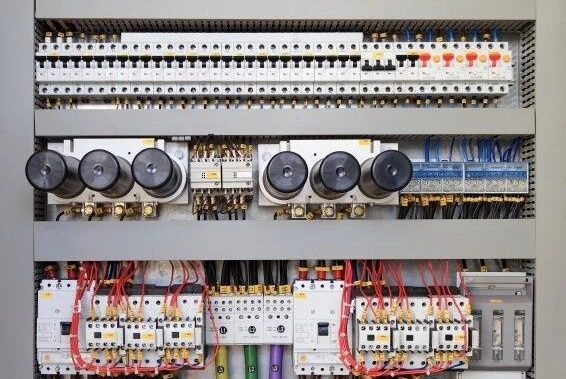
Demystifying Ingress Protection: Evaluating IP Ratings for Industrial Cabinets
On November 19, 2026 by lukasRethinking Ingress Protection in Industrial Cabinet Specification
Higher ingress protection is often treated as automatically better. In practice, that assumption can produce an enclosure that is more expensive, more difficult to cool, and no more reliable in the actual plant environment. A cabinet installed inside a clean, climate-controlled automation room has fundamentally different exposure risks from one positioned beside a food-processing washdown area, a dusty bulk-material conveyor, or an outdoor pump station.
Over-specifying enclosure sealing can create severe thermal management penalties. A highly sealed cabinet restricts natural and filtered forced-air ventilation, trapping heat from variable frequency drives, power supplies, contactors, PLCs, and network equipment. The resulting need for heat exchangers or air conditioning adds capital cost, energy consumption, maintenance points, and additional failure modes. Engineers planning automation layouts can review industrial cabinet solutions to compare construction materials, enclosure formats, and available protection classes without assuming that maximum sealing is always the correct choice.
A specification-first approach begins with realistic environmental risk assessment. Dust loading, water exposure, cleaning procedures, chemical agents, solar radiation, temperature cycling, condensation, and maintenance practices should all be documented before an IP rating is selected. This article explains how IEC 60529 protection codes work, what their tests do and do not prove, how sealing affects thermal behavior, and how gasket, door, cable-entry, and material choices determine whether a cabinet remains fit for the application from datasheet to deployment.
Deconstructing IEC 60529 Testing Realities and Rating Fundamentals
The IP code uses two principal digits. The first describes protection against solid foreign objects, including access to hazardous parts and the entry of dust. Ratings progress from limited protection against larger objects at IP1X through increasingly restrictive tests, with IP6X representing a dust-tight enclosure. The second digit describes resistance to water under specified laboratory conditions. An “X” means that the corresponding test has not been conducted or is not being claimed, not that the enclosure has zero protection in that category.
Water testing is graduated rather than universal. Depending on the claimed level, testing can involve vertically falling drops, water falling at different angles, spray from a nozzle, temporary immersion, continuous immersion, or powerful jets. The exact test arrangement, exposure duration, nozzle conditions, distance, and pressure matter. A cabinet that passes one level should not be assumed to pass a more severe level simply because both involve water. IEC 60529 testing guidance describes the controlled preparation, exposure, inspection, and functional assessment used to substantiate ingress claims.
- IP1X to IP2X: Protection against access by larger body parts or fingers, with progressively smaller access probes.
- IP3X to IP4X: Protection against tools, wires, and other solid objects above defined dimensions.
- IP5X: Dust protection that permits no harmful dust deposits, although complete dust exclusion is not claimed.
- IP6X: Dust-tight protection under the specified test conditions.
- Water digits: Protection varies from dripping water and spray to jets and immersion, depending on the second digit.
The critical distinction for industrial washdown is between water volume and dynamic kinetic pressure. A low-pressure spray may wet a cabinet extensively without reproducing the impact energy of a pressure washer. High-pressure cleaning can force water through imperfect door compression, cable glands, seams, pushbutton interfaces, and damaged coatings. Standardized evaluation protocols are maintained under international ingress classification frameworks, such as the comprehensive guidance documented in the IP code specification. The rating remains a controlled test result, not a guarantee against every field condition.
Industrial Cabinet Protection Tiers Across Common Plant Environments
IP54, IP55, IP65, and IP66 are common reference points for industrial cabinets, but each represents a different balance between environmental isolation and practical design. IP54 provides limited dust ingress protection and protection against water splashing from various directions. IP55 adds resistance to water jets, while IP65 provides dust-tight construction with low-pressure jet resistance. IP66 retains the same dust-tight first digit as IP65 but increases resistance to powerful water jets.
| Rating | Solid particle protection | Water protection | Typical application context |
|---|---|---|---|
| IP54 | Limited dust entry with no harmful deposits under the test conditions | Water splashes from different directions | Indoor automation rooms, general factory areas, and protected machinery zones |
| IP55 | Dust protected, but not fully dust-tight | Low-pressure water jets | Industrial areas with routine spray exposure and moderate contamination |
| IP65 | Dust-tight | Low-pressure water jets | Dusty production areas, outdoor protected locations, and moderate washdown |
| IP66 | Dust-tight | Powerful or high-pressure water jets | Outdoor equipment, storm exposure, and aggressive washdown or pressure-cleaning zones |
IP65 and IP66 therefore share identical dust protection but diverge significantly in hydro-kinetic tolerance. Selecting IP66 for every cabinet does not improve protection against dust compared with IP65. It may be justified where pressure washing, severe weather, or powerful directional jets are documented hazards, but it may be unnecessary in a dry indoor control room. The cabinet is also only as protected as its weakest system element. Cable glands, conduit fittings, doors, viewing windows, operators, and field modifications must support the intended rating.
IP ratings should also be distinguished from NEMA enclosure types. NEMA classifications address additional considerations such as corrosion, icing, oil, and coolants, so an IP code cannot be treated as a complete conversion into a NEMA type. Available industrial enclosure ranges illustrate the practical selection space, including mild steel, stainless steel, fiberglass, and polycarbonate housings with multiple hinge, latch, and rating options. For a broader background reference, the IP code overview provides a concise explanation of the numbering system, but project specifications should rely on the applicable standard and verified manufacturer test evidence.
The Engineering Tradeoffs Between Hermetic Sealing and Thermal Management
Every watt dissipated inside a cabinet becomes a thermal design requirement. Variable frequency drives are particularly important because their losses can be substantial, while PLCs, power supplies, relays, network switches, and braking components add cumulative heat. A sealed IP65 or IP66 cabinet cannot simply exchange internal air with the surrounding atmosphere through a conventional filtered fan without compromising the intended boundary. As sealing increases, heat must leave through the enclosure walls or through a closed-loop thermal device.
Filtered forced-air cooling is often efficient and economical in a suitable indoor environment because it uses ambient air to carry heat away. In a dusty, oily, corrosive, or wet location, however, that approach may contaminate the cabinet. Closed-loop air-to-air heat exchangers preserve separation between internal and external air, while cabinet air conditioners provide stronger cooling when ambient conditions are high. Both introduce cost, space requirements, condensate considerations, electrical consumption, and maintenance obligations. The correct comparison is therefore not simply enclosure price, but the complete installed and operated cooling system.
- Estimate heat dissipation at the worst credible load, not only at nominal production.
- Check the maximum external ambient temperature and solar loading for outdoor installations.
- Allow for blocked filters, fouled heat-exchanger surfaces, and reduced fan performance.
- Coordinate cooling equipment with door swing, cable routing, service access, and internal component spacing.
Pressure equalization also deserves attention. A sealed cabinet can experience internal vacuum or pressure pulses as temperature changes rapidly. Heating expands internal air, while cooling contracts it. Repeated cycles can pull moisture past gaskets or distort sealing behavior, especially where a door is large or latching force is uneven. A correctly specified condensation breather or pressure-equalization vent can reduce this stress while preserving the enclosure boundary, provided the device has an appropriate rating and is installed according to the manufacturer”s instructions. Basic mechanical principles discussed in IP sealing engineering guidance help clarify why pressure behavior matters even when no visible gap exists.
Gasket Chemistry and Mechanical Enclosure Design Considerations
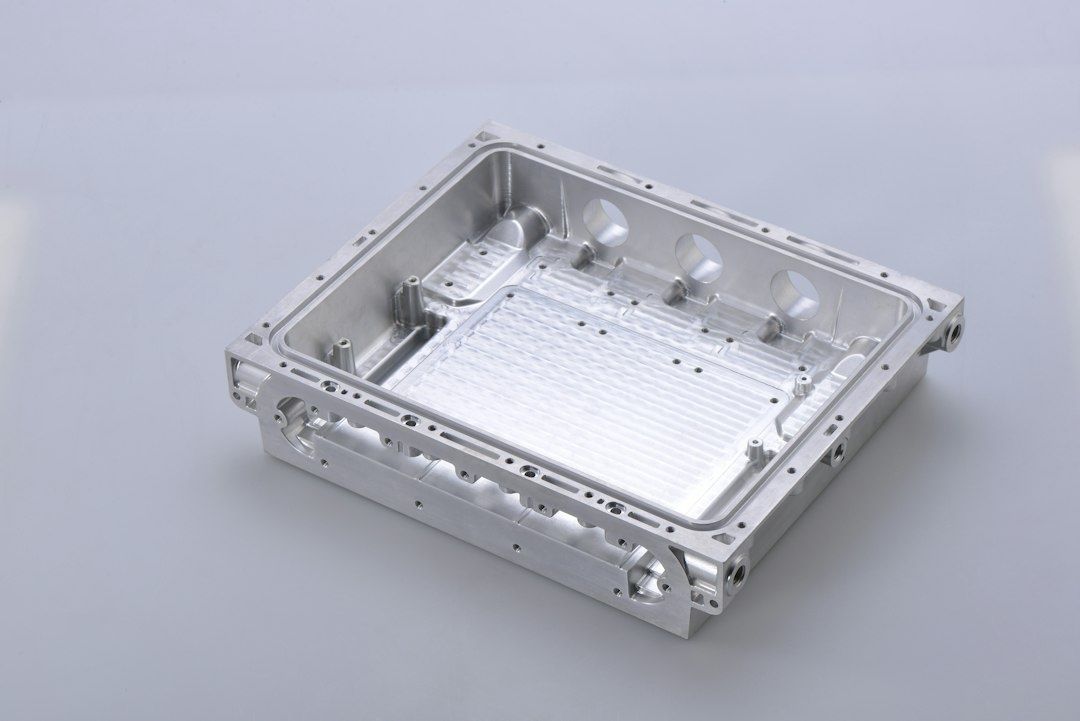
Gasket selection is a compatibility decision, not merely a choice between thick and thin foam. EPDM generally performs well against weathering, water, and ozone, while silicone offers broad temperature capability and flexibility. Neoprene can provide useful resistance to weather and some chemicals, and polyurethane foam-in-place gaskets can create continuous seals across complex cabinet geometries. The final selection should consider the actual chemical exposure, operating temperature, compression behavior, ultraviolet exposure, and expected service interval.
- EPDM: Often suitable for water, weather, and ozone exposure, but compatibility with petroleum-based fluids must be checked.
- Silicone: Useful across wide temperature ranges, with material compatibility and mechanical durability requiring review.
- Neoprene: A practical general-purpose elastomer where its chemical and temperature limits fit the environment.
- Polyurethane foam-in-place: Supports continuous custom seals, but formulation, compression set, and chemical exposure remain critical.
Chemical splash, ozone, ultraviolet radiation, and thermal compression set can gradually reduce sealing performance. A gasket may appear intact while becoming harder, permanently flattened, swollen, cracked, or detached from its retaining channel. Gasket compression of approximately 20 to 30 percent of free height is commonly more meaningful than gasket thickness alone. Continuous one-piece gaskets generally reduce interruption points compared with segmented arrangements, especially around corners and large door openings.
Mechanical design determines whether the selected material can perform consistently. Door latches must generate even compression without excessive force that distorts the frame. Hinges need accurate alignment, and large double-door cabinets require attention to frame stiffness, center gaps, and compression uniformity across the full perimeter. Continuous sealing welds are preferable on sealing-critical seams, while spot welding alone may leave pathways that undermine high-level protection. Housing material also affects lifecycle risk: painted carbon steel can be cost-effective indoors, marine-grade stainless steel can better tolerate demanding corrosion exposure, and composite polymers may reduce corrosion concerns while introducing different strength, impact, and thermal characteristics.
A Practical Decision Framework for Specifying Cabinet Enclosures
A defensible enclosure specification should proceed from the operating environment to the complete system design. The IP code is only one part of that process. Verify whether the rating applies to the assembled cabinet, including doors, windows, glands, conduit fittings, cooling equipment, and field-installed accessories. Where the application is safety-critical or unusually harsh, prototype or witnessed testing provides stronger evidence than a drawing review or an unverified datasheet statement.
- Quantify environmental hazards. Record ambient dust loading, particle type, washdown frequency, spray direction, cleaning pressure, chemical agents, humidity, condensation, ultraviolet exposure, and temperature cycling. Distinguish routine exposure from credible worst-case events.
- Calculate thermal requirements. Determine aggregate internal dissipation from drives, power supplies, controls, and auxiliary equipment. Compare the result with the maximum external ambient temperature and select ventilation, heat exchange, or air conditioning accordingly.
- Define access and installation constraints. Specify maintenance clearance, door access, cable entry positions, gland ratings, conduit interfaces, lifting requirements, and limits on future drilling or modification. A field modification can invalidate the original enclosure claim.
- Evaluate total cost of ownership. Include cabinet purchase cost, coating or stainless-steel premiums, cooling hardware, energy use, filter or heat-exchanger maintenance, gasket replacement, inspection labor, downtime risk, and expected service life.
Procurement documents should state the required rating, test basis, materials, gasket construction, cable-entry arrangement, cooling method, and inspection evidence. If IP66 is required only for a specific washdown face or operating mode, the design may benefit from targeted protection rather than uniform over-engineering. Conversely, if a cabinet will be exposed to high-pressure cleaning, specifying IP54 because the installation is technically indoors leaves an avoidable reliability gap.
Balancing Protection and Practicality on the Plant Floor
Reliable cabinet engineering balances environmental isolation with operability. Higher sealing can reduce dust and water ingress, but it can also trap heat, intensify pressure cycling, complicate maintenance, and increase the cost of cooling and replacement parts. A lower rating may be entirely appropriate in a controlled indoor location, while a higher rating becomes necessary where washdown, weather, corrosive contamination, or fine dust is demonstrated rather than assumed.
Maintenance preserves the rating long after factory testing is complete. Include gasket condition, latch operation, hinge alignment, gland tightness, unused-entry plugs, corrosion, coating damage, breather condition, and cooling performance in scheduled inspections. Increase inspection frequency where doors are frequently opened, cleaning is aggressive, or vibration can loosen fittings. Treat ingress protection as an application-matched envelope, not an automatic hierarchy, and document every field modification so the cabinet remains fit for service throughout its operational lifespan.